Thursday, September 24, 2009

Tunisia almost at an end

When we last saw our intrepid trio of tenacious travelers, they were heading south into the hills and valleys of the Tunisian mountains after a week of lounging on the beaches along the Northern coast.
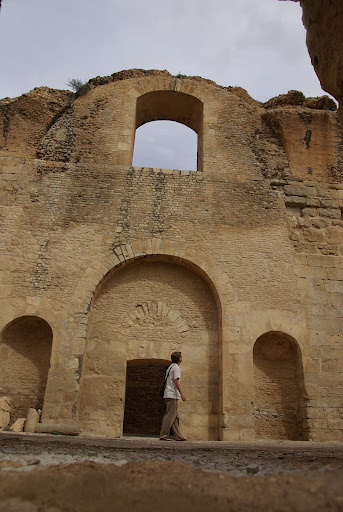
Let's check back in with them.

Since the last post they've made a loop of the Tunisian interior.


First was a southern leg from Tabarka to Le Kef, via the ancient Roman town of Bulla Regia. This was one long day of travel, but well worth it, both in the scenery of the ride, and the site of Bulla Regia. Heading south out of Tabarka, the road gradually rises from the seaside to some impressive hills and mountains. There were moments along the twisting and turning two lane road that it seemed our bus was just perched on the precipice, inches from toubling down the steep slopes. But the views were great and the small towns and villages seemed very picturesque, it's an area I would like to spend some time exploring in the future perhaps.
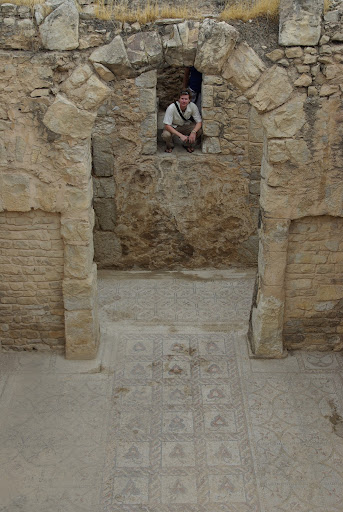
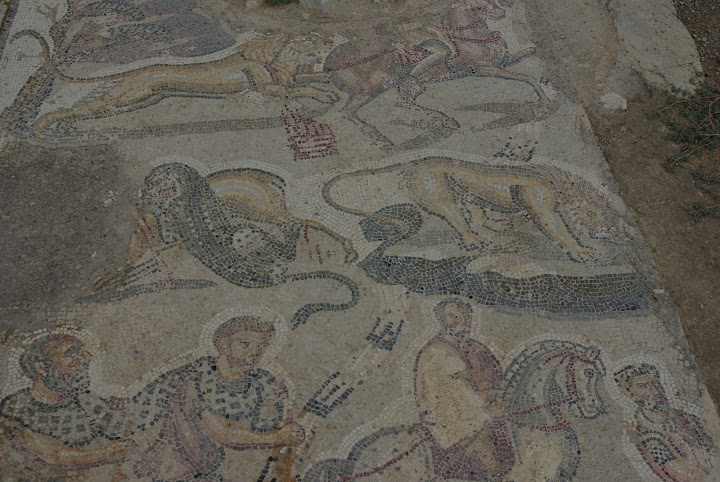
The bus dropped us off on the main road, at the turn for the Bulla Regia site, about 3km distance. We hiked in with our big packs, leaving them at the museum desk to check out the underground villas in the town. The roman town here has houses build underground to stay cool in the summer and warm in the winter and quite a few of them were very well preserved and you can just wander on in. Many great mosaics were left intact as well. The most impressive villa open had many underground rooms centered on an open-air atrium complete with a fountain.

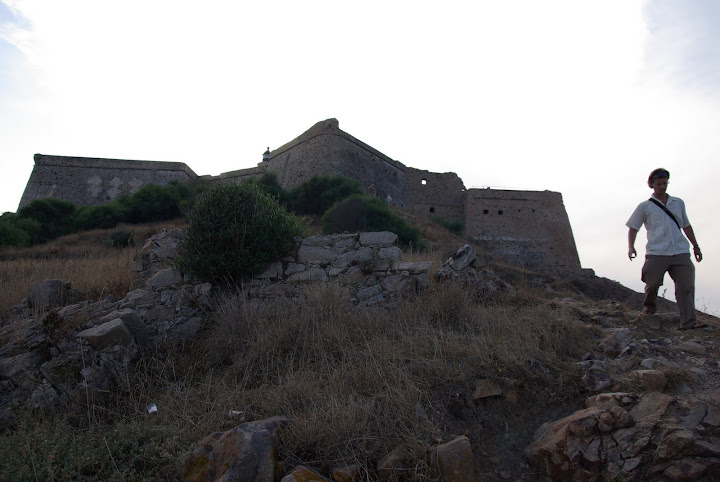
From here we moved onto El Kef (Le Kef), having to hike up hill to get from the bus station to the town's center, based around the Kasbah (castle) perched on the top of the hill. El Kef has been a defensive point in Tunisia for millenia, for punic, carthaginian, roman, namibian, and islamic civilizations. It is a nice, laid back mountain top place with great views out over the surrounding rolling farm lands.
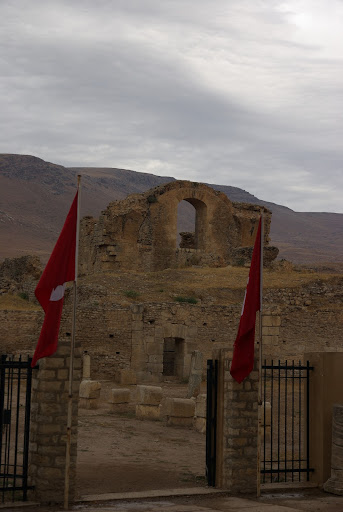
After two nights here, we were set to move on. The plan was to hit the Roman town of Haidra and the hill fort of Jugurtha, south of El Kef, but on route our bus broke down for a couple hours and we missed our morning window to find transit out to these remote areas so we decided to continue on and she the Roman town of Sbeitla just outside of Kesserine, an interior transit hub for Tunisia and an area much easier to navigate through.

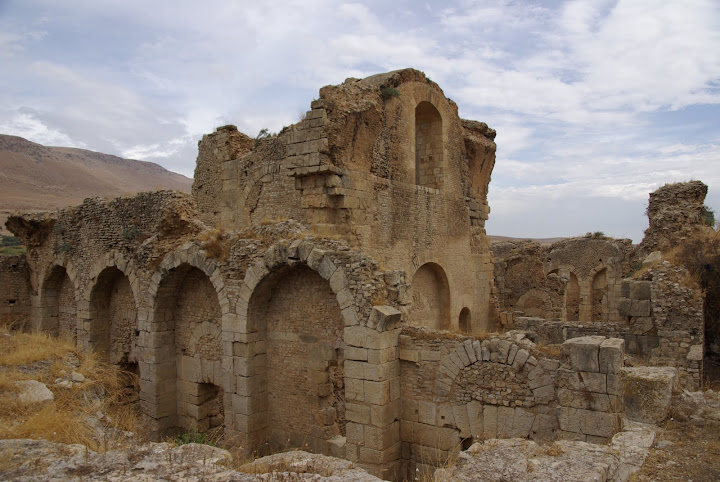
Turned out to be a good choice since Sbeitla was a great site in it's own, complete with some great towering temples. Three of them were built right next to the town's forum, one each to Jupiter, Minervana, and Juno and they're the highlight of what's left of the place, but it's also home to a great theatre and the scale of the city from one side to the other gives you a sense of the size some of these towns could be. It's a good half a kilometer from one side to the other and just packed with streets, houses, a market area, the forum, baths, amphitheater, theater, all your good ol' roman trappings of a town. And this wasn't even that big of a place. I would have loved to see it during it's hey-day.

From here, we were on to Kairouan, one of the seven holy cities of Islam and home to the oldest mosque in North Africa. The city has a great medina and of course more mosques and mosoleums to holy Muslims than you can shake a stick at.

We were here for the last couple of days of Ramadan, so we got to enjoy the Medina's night life as it came to the end. We had many cups of tea, ate good sandwiches and played a lot of hearts. It was almost sad to say goodbye, but the time was right to move on again, this time to Sousse.

Sousse. What can I say about Sousse? Don't go here. It's a tourist trap, artificial atmosphere place with way too many euro-trash vacationers in their gaudy clothing (or what only sometimes partially passes as clothing). What a striking difference to Kairouan, a real tunisian (and islamic) town we loved. We ended up staying two nights in Souse, just because we didn't realize how bad it was till it was too late. Oh well, live, travel, and learn.

So we hoped the train back to Tunis and rolled in here Tuesday night. We went straight to make the ferry reservations and it's a good thing too, because we found that all the ferries were booked solid for two weeks, meaning a scramble for a new itinerary and course of action. We settled on a flight direct from Tunis to Barcelona. That unfortunately means cutting out Sicily and the South of France, but it does mean we get to spend an entire three weeks in Spain, giving us the time to make our way leisurely about. I'll just have to hit Sicily and the South some other time.... still on the to-travel list. We fly out on sunday.

So for the next couple of days, we'll be killing time in Tunis. We visited the Bardo yesterday. The Bardo is Tunisia's biggest museum and home to some great mosaics from it's roman archeological sites. Spend a good deal of time picture taking and wandering the rooms. Unfortunately a lot of the place was closed down for work.

The beach was our target today. And it probably will be tomorrow as well. And Saturday. Unfortunately the cyber cafe here isn't letting me do much to upload photos, I'll try again later, but for now, there's only a couple new ones to see at my picasa album.

Will catch you all up again later from Spain. Bi'salama!


Sunday, September 13, 2009

Tunisia Photos

From Tunisia


Not much more to add, we've moved on from Bizerte to Tabarka on the Norhtern coast. Now near the Algerian border. Will pass a couple days here and then head south into the mountains. Added some pictures at picasa to check out.

Ma'as-salama for now

From Tunisia


From Tunisia


From Tunisia


From Tunisia

Friday, September 11, 2009

Tunisia

So it's been just under a week in Tunisia so far. Of course the first day was mostly traveling, but since arrival we've had some great beach time and seen carthage and the medina, some good touristy things. Now we're trying to get off the path a little and onto the quiet beaches. It is off season now so really there isn't much in the way of crowds anyway.

No pictures yet, I need to load them onto my tumb drive for the next posting....

We found Tunis to be a great place. It's Ramadan right now, so that limits our ability to enjoy the food and cafés, but Tunisians make up for it at night with an almost carnival atmospehere of shoping and eating in the streets of Tunis. Was great to come back from the beach at 5, eat and nap till 9, then head out for tea and people wathcing on the streets. Wow, Tunisians love their shopping! I've never seen so many shoe stores side by side.

Currently we're just outside of Bizerte on the Northern coast, camped at a little ground just off the beach at Remel.

The weather has been (mostly) perfect, warm enough for swimming, but almost chilly in the evening (last night it was down right cold by niger standards). Night before lastwe had a bit of rain. Me, being in the tent with no rain fly, I had to scramble to find a dry place in the camp ground. Ended up sleeping on the walkway next to the closed caffeteria, but then had to move when it started to flood. Ended up on the covered area just outside the bathrooms. Was able to get to sleep despite the damp sleeping bag and was later awaken by the guard of the grounds telling me to go sleep in one of the rooms they have, which he had opened for me. It was a long and cold night up to that point ad I've got a bit of a cold to remember it by, but that's the adventure of traveling.

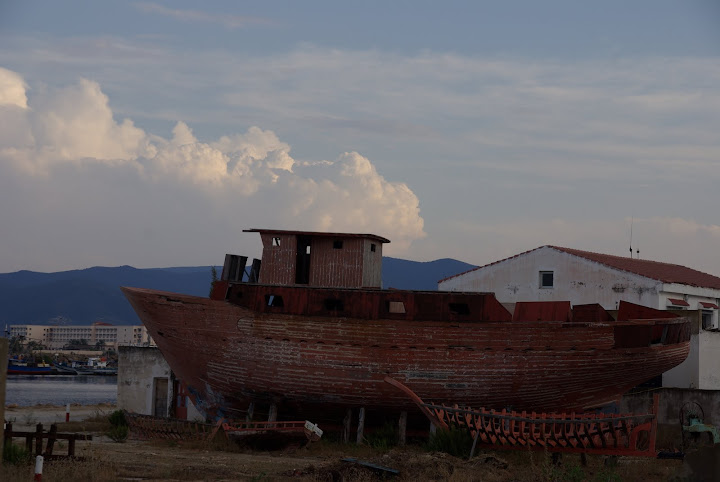
Next morning (yesterday) I got up to explore the shipwrecks about 2 miles down the beach. The storm from the night before was still hangning around, but looked like it would head inland. It gave me some slight mist on the way there, but as soon as I reached the wrecks it took an abrupt left turn, headed back OUT to sea and came right over top of me. I ended up seeking shelter in the shack of these two Tunisian fisherman hidden in the brush on a dune just above the beach. Here's me, soaking and these two who don't speak a lick of french. Conversation was just gestures and 'Bush... (thumbs down). Obama.... (shrug, we're not sure what to make of him yet body language).'

Hung out there,wishing I had brought the travel book which has a scant section on Arabic so I could learn a little, when the foreman of the company tearing up the nearest Wreck to shore came by. I was invited to come get a closer look and see thm pulling the wreck apart beam by beam and rivet by rivet. A lot of work.

Well my hour on the internet is approaching quick. I hope to do more short posts on route (with pictures!)

Until then.

Monday, August 31, 2009

Goodbye

So I guess I've been avoiding writing about my immanent departure from Niger, both here and in my handwritten journal. It's not like I trying to pretend I'm staying here, that's not it, I'm very actively packing, re-packing, and searching out souvenirs and music to send back home. I think what it comes down to is that I don't want to analyze this experience yet, to look back and think about everything I've done, attempted to do, failed to do, never even started.


Peace Corps is a strange and wonderful experience. We left our homes, families, and friends, to come live like and with the people of a country we knew nothing about before landing. We learned the language, we integrated, we made friends and found new families. Some of us did work, some didn't, but the fact is just in coming we ALL did something.

Peace Corps has three stated goals: 1) to aid developing countries with their need for trained men and women, 2) to bring American culture and an understanding of Americans to a foreign culture, and 3) to bring that foreign culture and understanding back to Americans at home.

The first goal is 'work.' The other two are 'life.' Peace Corps really should be all about the life part. Yes, it would be great to see volunteers help to develop a country, but, as currently organized and funded it volunteers really have no chance to do anything about the 'development' of a country. Not in terms of buildings or gardens or any of that. What Peace Corps should focus more on is the "ambassadors of America" type of idea. Send Americans out, good examples of Americans to live in foreign places, to introduce new ideas and different ways of thinking. THAT is how volunteers can really make a difference. Help people realize that there is another way of living out there; corruption doesn't have to be rampant, children don't have to die of preventable diseases like malaria, you don't have to have twenty kids. But that kind of change takes a long time and needs constant deployment of volunteers. AND that type of development doesn't produce the numbers.


If there's one thing that frustrated me about Peace Corps it's the emphasis on numbers. How many people did you convince to go to school? How many people understand better how to grow meranga? How many will send their girls to school?

Every four months we have to provide the numbers. And you know what, it's all BS. Who can actually tell you how many people are now making Oral Re-hydration Solution for their babies with diarrhea after listening to my radio show? But in order to have funding we have to show numbers, even if they're just fabricated out of thin air.


That mentality needs to change. The idea that you can quantify development and the human condition. I understand the need for oversight and all that, but there are better, more subjective ways to do that (and subjectivity is necessary in this type of field, dealing with humans).

But anyway, this is the exact type of thinking I have been avoiding by not writing as of late. Let me fill you in on the facts of life as they have been:

I''ve moved out of Gaya. Took a Peace Corps car up from Gaya on Tuesday. Did my last radio show the week before and spent the week saying goodbye and passing out my e-mail address, though that's unlikely to get many messages. Check out pictures of my last week. It wasn't all that hard to leave. Some people cry, some get depressed... I guess I'm just not the type to dwell in one place all too long. I'm anxious to get back on the road.

I met my replacement. His name is Brian, he's from Massachusets. I think he'll fit in well in Gaya. We had a good time, I spent my last two days showing him around - work, important types, like the mayor and prefet, and of course my friends and where to get good food and the occasional beer. Took him to the border to introduce him to the guards there so he won't have much trouble getting across.


It seems weird now to think I won't be going back because it still feels like I should be going back next week. It's strange to think that I'm leaving this country on a plane saturday morning. When will I see goats as passangers on motorcycles again? Or hear Zarma? It's so satisfying to hear a local language and know what people are saying about you, then to bust in with a comment and watch their floored expression, "You hear Zarma?!" Yes I do.

When will I ever be able to do that again?

So now I'm in Niamey doing paperwork, hanging out with my friends here I may never see again, but that's life isn't it? Things are constantly moving forward, changing. We can't stay still in the present like statues. That's living. I guess in some way I've throw myself into a live that will always constantly be flowing. If I had stayed at home, settled into a job, I would have the same friends, the same city, same house. Maybe the small things would change, but the essence of my life would stay. That can be a comforting and pleasant thing, something I will one day want. But I'm young, this is the time when I can pursue an international career, I can travel, see and do things, develop a world view that I could never settled in one place.

Traveling plans for now:

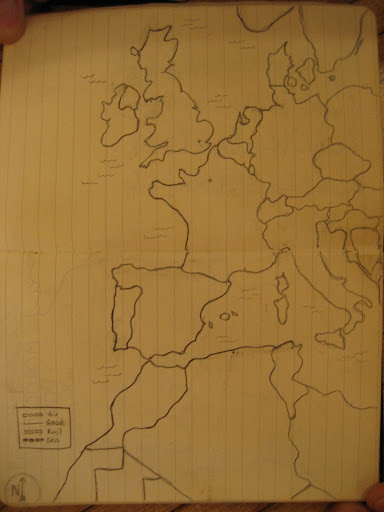
Tunisia - Sicily - Italy - France - Spain - UK - Iceland

My and my buddy's Josh and Will are taking to the air, road, and water on a cross-europe trip. Should be a pretty good time, these two guys have become some of my better friends over the course of the last two years and this will be a great experience to share.

-Route to be Filled in on the way, South to North-

It's not as spectacular as our envisioned motorcycle trip (Niamey to London on bikes!), but given the hassle of borders and Al-Qaeda of the Magreb and cold european weather to ride through in November.... well I'll take the beaches of the mediteranian at a liesurely pace over that right now. Just get me to the water!

- Original Trip route -

If anyone knows of willing people that have places we could crash at or places to see along the way (staying mostly along the coast, traveling north from southern italy all the way across france to spain) let me know.

Happy trails for now

Monday, June 22, 2009

Close of Service Conference and Giraffes!


And of course, sticking to the way of doing normal business a month has gone by and not a single post has gone up. At least this time though I can say honestly that it's because I've been quite busy. I've gone on a week long bike ride in Benin, had our close of service conference in Niamey and spent a week in Gaya trying to get everything finished up in terms of work and the text books.

Bike Ride in Benin -

Being that I'm right on the border, my closest PCV (Peace Corps Volunteer) neighbor is in Malanville just across the river from Gaya, a mere 7km away. She knows I'm into biking and invited me along on their Family Planning education bike tour from Kalele to Parakou in central Benin. Got the project and ability to travel cleared through the Bureau and was off on the bike ride from May 27th till June 2nd.


Differences between Benin and Niger Peace Corps experiences:

Food- Oh my god, what good food they have in Benin. Even the pounded stuff is better there; it's yams and rice instead of millet. They have cheese!!!! Cheese in all every sauce in fact. And there's juices, bisap, much deliciousness was to be had.

Weather- We biked 20km at 1pm, and no one died. I don't think that could be possible in Niger. It was hot in Benin, by Seattle standards, but not by Niger standards, maybe mid 80's to low 90's, nice biking weather in my opinion. Plus it rained on us once, which up to that point hadn't really happened yet. Funny story on that episode; it was our first day riding and we were on the last leg of the day. As we were getting ready to leave the village we heard our first clap of thunder and the clouds that had been slowing growning more and more ominous took on an especially dark look. We thought, "hey let's try to outrun it" and so we took off. It seemed like everything would work out fine, the road ran opposite from the approaching storm which blew at our backs a refreshing breeze. Then, in a 'turn' for the worst, the road curved so that the last 10km ran perpendicular to the storm's path and before we knew it, rain started up in big wet drops. Luckily, the lead biker saw a three room house that for some reason these two Beninois guys had built in the middle of nowhere and we (20 people) were able to take refuge inside one of the (small) rooms for an hour till the front blew past. Played the harmonica a little bit inside and, with the heat and sweat, it felt sort of like being locked away in a small prison cell. But at least we weren't rained on...

Language - This is one area where PC Niger has Benin beat. We hear the local languages. Every Niger PCV is taught a local language and so we are able to be a little more connected with our communities, especially bush villages, rural places where education isn't so good and people might not understand french. In Benin, the problem is really that there are so many languages (60) that it's damn near impossible for PC to teach their volunteers the language in their village and so they stick to French. In Niger we can usually get by with teaching hausa or zarma, though other languages are around these predominate and most people can understand at least a little in either one. Volunteers in Niger have also organized trainings for themselves on other native languages like Fulan or Tamachec when they thought it would be usefull.

Clothing - It's a lot more casual in Benin. I wore SHORTS for an entire week. Wow. Plus I saw girls' knees; I had to be physically restrained.

The Volunteers - Not too different. They complain about the bureau, they love and hate their experience and the country (mostly love), and they can drink a grand biere in about 5 minutes flat.

The Work - While the health and environmental sectors are basically the same, Benin has small business and english teaching volunteers that Niger doesn't. Our education volunteers, like myself don't teach.

The ride was 160k over 4 days and it was beautiful. We did around four meetings a day, one in each village we passed, talking about the why and how of family planning. Nothing funnier than asking someone to demonstrate condom use on a wooden phalis.

I really love biking and a bike will have to be the first thing I buy back state side. I don't even want a car. Spring time plan is to bike to San Fransisco. Incha Allah.

So that was my wonderful 'work' week in Benin. Couldn't have asked for more on a vacation.

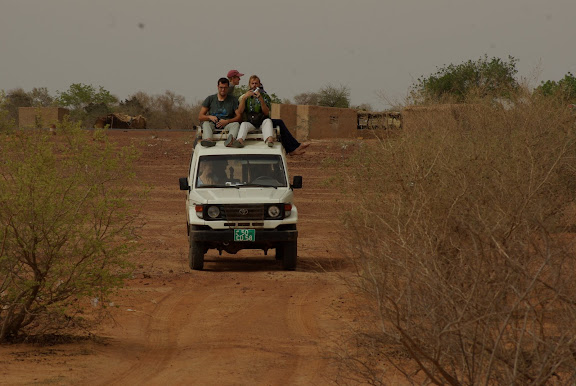
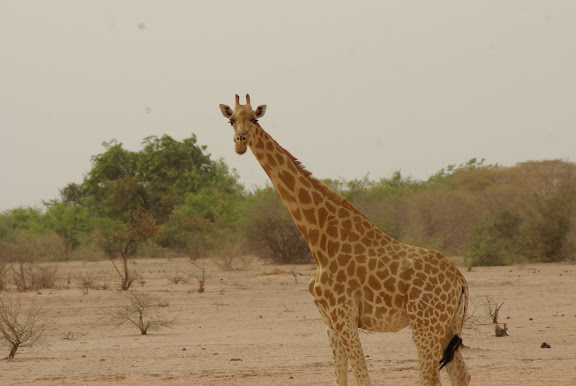
Last week was our Close of Service (COS) conference. The group I came to country with got together for the last time as a whole and we had session on resume writting, readjusting to life, the administrative side of things, etc. Best part of the 'official' conference part was a trip to see the giraffes. Last time I walked, this time, air conditioned car!

We also had a big dinner together, watched a slide show of pictures of our time together and then had a party to celebrate our two years. It's sad to think of not seeing many of these people again, but I'm also ready to move on from this experience to the next, even if I'm not sure what, entirely that will be.

I've been looking into law programs which are strong in international law, and thinking of matching that up with either a masters in public administration (MPA), or a legal masters (LLM) in sustainable international development (UW!) or another international emphasis. Both ideas would be four year programs, but are highly selective for the schools I'm looking at (NYU, Columbia, Duke, UW, American University) AND I'd have to do a lot of the work in applying and looking for money from here.

I might want to take a year off to organize myself and get things together. At least I'm starting to get on it now. Better late than never. T-minus 5 months till application deadlines. First thing - resume and my COS paperwork.


Anyway, some happy news is that the planning for The Trip is coming along well. So far the basic itininery includes tunisia, sicily, italy, france, spain, the UK, and either Ireland or Iceland (maybe both!). Planned out almost three months for travel with Josh and Will. Should be an amazing trip and a chance to move on from this place in style. If anyone has any travel ideas or knows anyone willing to play host to some returning volunteers let me know.


Oh, I almost forgot -

Niger Political Update:

If you haven't heard (and US news being all about presidential fly swatting and not substansive news) Tandja, the President, disolved the National Assembly a couple weeks ago after the constitutional court ruled against his bid for a third term. There was some rioting (they attacked the Governor's house in Dosso, and burned part of it down, the grand marche in Niamey caught fire, police fired tear gas into crowds, one woman died), but most of the protesting has been peaceful and there is no big threat to anyone here or a big chance that the government will fall apart. Everything done so far (even on Tandja's side) has been within the letter of the law. Tandja wants to hold a national referendum on constitutional ammendment in August which would allow him a third chance at election, but recent rumor has him planning on stepping down now that the opposition is gaining strength. Nothing official yet.


Also, I added new Pictures to Picasa in two albums: Benin Bike Ride and Giraffes!!!


Sunday, May 24, 2009

Four Seasons

In Niamey. Came in because I 1)chipped a tooth and so have a dentist appointment and 2) wanted to grab my passport so I can participate (incha allah) in a bike ride in Benin this coming week - though nothign certain yet.

It rained last night, a good solid rain. So that begs the question, Is rainy season here?

Of course in Gaya we had our first 'rain' way back on April 20th, but it was a pitiful amount and since then there have been a couple of good sprinkles, but nothing substantial that has really gotten people excited to plant their fields.

In honor of the upcoming (and long awaited) rains I wanted to give a brief summary of the four seasons Niger style:

June - September : Rainy season. The long dry spell which lasts the entire year finally breaks and the dust, quite litteraly settles, so that things have a cooler and cleaner feeling. The temperatures drop, at least when it's raining, which is a god-send at night when hot season can make it almost impossible to sleep. The downsides are that after the rains, the strong sun here will pull the mositure back out of the ground and it can become VERY humid - think the South in the US, only with hotter sun, but just as much humidity. It feels like the earth is breathing out one long steady hot breath. Another downside is the bugs. They die out over the long dry spell, but come the rains, come the mosquitos, flies, etc. This is malaria season as well as planting season.

October - November : Mini Hot Season. After the rains end there is typically a two month period where the heat rears its ugly heat again. Really I think that the heat never went away, the rains just mitigate it a lot and so after the rains it seems as if the whole world heats up again. This is harvest time as well so lots of hot work for Nigeriens.

December - Febuary : Cold season. Keep in mind cold is a relative thing here. Cold could be 80 degrees, but sometimes it gets down to the parka wearing depths of 60 degrees... parka wearing if you're a Nigerien, though for me, a fleece is enough. Surprising how we can become accustomed to a certain range of temperatures. I frequently think, oh it's not too hot today, only to look at a thermometer and see it read 95. Cold season can be nice since it's 'cold', but it's also the start of the long dry stretch where everything green starts to wither and die and the dusts of the Harmatten start to haze the sky and coat everything in the house in a fine layer of sand. This is the time when people do their gardening so tomatoes and other veggies are more available.

March - May : HOT season. Pretty self explanitory. 110-115, even as high as 120 in some places and times, though not usually that hot in Gaya. The dust of cold season continues to hang around, but the winds stop blowing for days at a time and the heat can just settle in like a blanket that one can never throw off. Pretty terrible at night when the temperature barely changes from the day time. Life during hot season is largely onr of trying to stay as cool as possible, naps in the afternoon, and a lot of sweating. Bus rides are a bad idea during hot season (though unavoidable usually). The saving grace of hot season is that the mangos start to ripen.

Just a short post about nothing. Small chat on the weather if you will.

Kala Tonton.

Monday, May 11, 2009

Musings on Development

A short preface for this essay: I just started reading The End of Poverty by Jeffrey Sachs and will be reading Dead Aid when I receive a copy in the next couple weeks (thanks mom and dad!), so my opion here (and as the side bar says, MY opion, Peace Corps' it is not) may change and evolve, as perhaps this essay will as well as I shift through the thoughs even more. This is just my view at the moment as I exist here in Niger; West Africa. Enjoy.


Development in Africa - Big Men, NGOs and Money

I heard a book review on BBC a while back about a book by a Zambian author, entitled Dead Aid. It’s about development in the third world, or I guess more like what’s wrong with it and why development here in Africa lags so far behind. I’ve yet to read it, but a copy is on the way, and from what I hear, its themes tie in with much of my musings and conversations of the past couple months as I start to sum up in my head what I’ve done here, what I’ve seen, learned, and accomplished.

Up front, Africa is not the US, Africa is not Europe, not Asia, or anywhere else. Africa is a unique place (aren’t they all really?) and what works elsewhere will not here. Africans see the world differently, they value different norms.

African culture is centered heavily on Big Men, that’s to say chiefs (village, tribal, etc), governors, presidents, generals, dictators, even the local police sergeant. There’s a certain affinity to look to these people and to have a sort of patronage relationship where, if you just go along and support him, you’ll get something in return. In fact, glad handing to important types is so important, people will even allow themselves to be humiliated by Big Men and give no resistance. It’s why I have to inform the Inspector, the Mayor, the Prefet (like a local governor), the local counselors, and everyone deemed important before I so much as think of doing something.

This is a system and way of thinking that pre-dates the arrival of white folks (read Europeans). I just read Things Fall Apart and the first section is pre white arrival and one can clearly see these themes expressed. Colonization only played into and upon this system. Europeans appeared and became the Big Men of Big Men through intimidation, violence, and lots of nice, shiny things to sell and give away. All these being acceptable ways of becoming a Big Man, Europeans were easily integrated into the social hierarchy in Africa as the Biggest Men without altering society at all. In fact, supporting this system just helped Europe maintain its control. What use would encouraging democracy and civil equality have to six white guys trying to maintain control and dominance over 3 million black people?

Maybe you can see how, after Europe pulled up stakes and left following World War II, there was a sudden power vacuum for the new Biggest Men. Europe said, “Now that we’re gone, you should have governments like we do,” but it was a concept without foundation in Africa, even under European rule. Sure, people could understand the concept, those with high levels of education could even cherish the idea behind it – equality – but without an anchor in social life, democracy is a concept like quantum theory, to be taught in schools, to profess knowledge and acceptance of, yet, secretly at night, in bed, to admit to oneself that there’s something that is floating just out of conceptional reach, making the whole thing sort of alien and unreal, unnatural.

Can we superimpose a vision of social order upon a culture that has historically been arranged around another, almost opposite, concept? No. At least ‘no’ in the short term. Culture change usually takes a long time, something America and Europe are learning the hard way in other places where we’ve tried to ‘encourage’ democracy.

And even in our own past we can cite examples of change occurring at a slow pace. In the United States, where ‘all men are created equal’ is the most basic concept professed in our culture, it has taken hundreds of years to progress to the point where in reality men and women of different color really do have equal rights and there’s still room to move forward. How long will it take for this to happen in a land where ‘all men are not created equal, some are Big and many are Small’? It’s no wonder that half a century after African ‘independence,’ countries are still trying to figure out what their society represents and where it is going.

Like America and European societies, development, economically and in terms of health, wellness of life, must be tied to ‘development’ socially. Perhaps it is better to term it as a ‘move’ toward more liberal and humanitarian thought, a more just, equal, and predictable society, since some may not view this as ‘development’, but social change, for good or for bad (development would imply ‘good’ and many people see African society as just fine where it is). In the West this social ‘development’ (or ‘change’ or ‘move’, whatever) started with those on the bottom, the farmers in colonial America, the proletariat in France, the serfs and indentured servants of the world raising up to demand their place at the table and their piece of the pie. The idea that development only really occurs if everyone gains benefit, all boats rising together, as I recently found myself explaining to one Nigerien colleague with whom I was having a conversation about the topic.

In Africa, development has been mostly done backwards. The influx of big money in the 80’s and 90’s just went, for the most part, to support Big Men and the Big Man mentality. Instead of helping, this money has been a hindrance in many ways.

During the 60’s and 70’s there wasn’t really that much in the way of aid going to Africa, and I think Africa was actually more firmly on the path to development than it is now. Speaking for Niger at least, I can say for certain that education and infrastructure were better developed than how. I have to clarify though, that’s to say they were better developed for those with access. Yes, those living in the bush still went without, but those educated were well educated and those living in the cities had well planned and modern cities. From this start, which was largely funded by the governments and private enterprise of the countries themselves, the road to development, as happened in the US and in Europe, runs from the cities outwards to the ‘bush’ or ‘countryside’. And this is where Africa lost its way on the path to ‘development’. The West, I think rightfully, thought that they could provide money and help rural Africa develop, but instead of really helping, we just gave tons of money to allay our guilt at seeing starving children on the news.

This new influx of money went first to the governments, where, being of the Big Men mentality, everyone skimmed a little off the top as it made it’s way out to the bush. Africans expected this to happen, they still do really, but now it’s usually written into a budget as ‘per-diem’, what people are paid daily to just come and do what they should come and do anyway. However, Africans also expected governments to actually do some development, and this is the normal path of the farmers, the workers, demanding of their government an equal chance in life. What changed was that money began shifting more and more to NGOs and away from the government exclusively as the West saw the graft and waste governments were creating and instead of demanding better accountability, they just tried to work around the problem, hence the birth of the Non-Governmental Organization as imputis for development.

Two things happened with this development on ‘development’. First, governments got a ‘get out of jail free’ card to play on actually having to do any real development. NGOs were now the real face of it, not government Big Men, who were now just supporting actors allowing them to hold power and profit, but show even poorer results. Second, NGOs started throwing money into one project after another as budgets grew and grew and grew through the last two decades of the 20th century. But this money came with no long term support or coordination within the country, what should have been the role of government and local actors, meaning that many projects that had cost much to start ultimately failed due to a lack of oversight and long term vision.

In the 1980’s in Gaya, for example, some NGO came in, saw the river, saw the climate, and thought ‘this area could do really well if we brought in fruit trees and planted orchards here.’ GREAT idea. This area is ideally suited for mango, orange, lime, grapefruit, banana… So the NGO built workers’ housing, irrigation, provided transport, seeds, and know-how to the initial workers, and then they left. No real thought was put into what happens next. The government took over for a while, but the money was never the same and everything began to fall into disrepair, disarray. Eventually, maybe some four years ago, the government finally just said ‘enough is enough, we’re done, we’re outta here.’ Luckily for Gaya, fruit orchards, once started, are a pretty easy thing to keep up. I’m not sure entirely how they were divided up, but now they are all privately owned and in addition to the fruit trees most private spaces also sport vegetable gardens thanks to the proximity of the river and some wells long ago dug by the NGO. The buildings, buses and farm equipment are still here, but they’re falling down or rusting hunks of scrap with no use. Gaya’s biggest development story has a happy (enough) ending since it transitioned easily into private business, but what if this had been a story of school buildings or material, or a water pump for a village (as opposed to an open well – both time/energy saving and more hygienic), or a hospital? The NGO’s pull out, and then the government’s, would have meant the whole thing would have collapsed, a waste of time and money in the end.

So now money has corrupted an already corrupt system. Aid money has, I dare say, set Africa back on the path to development. It has become, as Reagan era reformers would say, a hand-out society, where, at all levels, from small villages to Presidents, everyone just expects some fund, foreign state, or most likely, some NGO to come in with a bunch of money, spread it around, and then leave, probably leaving some new shiny stuff behind as well. ‘Development’ has become about overseas Big Men bringing stuff and money to those in need and after twenty, almost thirty, years of that, it has become the new standard and expected by all.

Being a Peace Corps volunteer, I get the bad end of that standard. I’m not a big NGO (or even a small one) with money or stuff to give to people. The idea is that, unlike many NGOs, I integrated into my community, became a part of it, while the Swiss NGO in Gaya, of which I never see the two white guys running it, hunkers down in their big beautiful house with guards, a cook, and air conditioning. Fairly enough, they work mostly in the bush, not in town, but why do I never see them in market or even just walking around? Because they are money and stuff and I am community and integration and an attempt to understand where I live.

As a volunteer, I’m more about connecting with people to exchange ideas and culture. And, really, that is what development in Africa needs the most: Guidance and ideas, not money. A road map on how to move forward, not the means by which to do it. It needs people willing to go live in a village for a year or two to teach them about desertification or nutrition or clean water or the importance of sending their children to that brand new shiny school the government or some NGO just built next door, instead of holding them at home. Sounds like Peace Corps, I know, but what needs to be different, is that these people should really know what they’re talking about. Peace Corps trains volunteers for two to three months before they head out to post, that’s not sufficient to really provide knowledge on many subjects. It’s lucky for us that, being Americans, and highly educated Americans for the most part (it’s not easy to make it into Peace Corps without higher education) we already have a head start on most villagers so we can fake deeper knowledge than we have. It’s not a stretch for us to know hand washing is important, but for an African villager….

More importantly than training Americans, or whatever other foreigners may chose to live as Africans in Africa (JICA!!! Japanese are awesome!), development in this way, that is, community based, should really be done by, what Peace Corps terms as, Host Country Nationals (HCNs) – people who live in that country. Training them for three months is different than training us. Language – not a problem. Cultural integration – not a problem. Just get them trained on the information; how to plant fields more efficiently, how to fight soil erosion, how to rehydrate a baby with diarrhea. To employ HCNs in this way would provide much needed jobs and would help develop, not just knowledge at the village level, but social development – Imagine a woman trained and sent by the government to help farmers farm better, that would turn some heads. Even just a man would mean stirring the pot a little and that’s something that’s need to create social change.

A teacher and a community development agent in each village!

This type of agent wouldn’t be something for Peace Corps to train, don’t get me wrong. That’s not Peace Corps’ role. But the ultimate goal of PC is for us not to be needed anymore for development. I would love to see one day where PCVs are cultural ambassadors, who may work with HCN development agents on projects, but whose real ‘job’ is just to integrate, spread good will on the behalf of Americans and to take home an understanding of foreign culture to share with others.

Being an education volunteer, that’s the area I usually focus on the most when I think about development. Education, though, really is the base of development. Education in the ABCs and in soil restoration are equally important and both are sorely neglected, but formal education, schools, as I mentioned before are, unfortunately, worse now than they were ten, twenty, thirty years ago. That’s entirely true, from a matter of perspective. Let me explain.

Starting in 2000, Niger launched a ten-year education plan to revamp a system that stagnated through the late 80’s and 90’s. The goal was to bring a school within reach of every child. Admirable. Problem was, who’s going to teach in this school? Under 14 years old is the fastest growing population group in Niger, so that means not only ‘who’s going to teach this year’, but ‘who will be the teacher that we will need to add to that school in two years and then again another the year after and then again another new teacher two years after that’. Niger started a crash course program to train teachers and send them into the bush, which unfortunately has just produced many poorly trained and underpaid teachers. So education may be more widespread than previously, but on a whole it’s of poorer quality as compared to the 70’s, for example, where schools may only have been found in the big towns, but they were funded, equipped with books and university educated teachers, not only from Niger, but from other West-African countries, in other words, a quality education, though limited in its access.

This is nothing to say about the lack of funding the program has received from Niamey. Months will go by and teachers won’t be paid. No wonder they go on strike what seems like every other week (though something must be mentioned about the French influence here…). I just recently read a manifesto published by the biggest teacher’s union in Niger, the Société National des Enseignants du Niger (SNEN). The manifesto demanded that the government immediately produce the promised money for the ten-year plan that has been undistributed for almost a year now, amounting to billions of francs CFA, millions of US dollars. That’s money, not just for teacher’s pay, since that tends to be the first thing paid, but for also for books, school buildings, everything within the educational system. The manifesto warned of an implosion of the education system if nothing changed and I’m not sure that was just tough language. Would you do the hard and all too often thankless task of teaching for free while you see members of government getting acquitted of embezzlement charges and drive home in their brand new Hummer? What kind of future teacher will a student who receives a sub-standard education make, and what kind of downward spiral in educational quality does this mean?

Africa is a land of Big Men and the Big Man mentality. The Big Men drive hummers and send their kids to private school and the rest of the country watches and says nothing, or says very little because the squeaky wheel gets greased in Africa, but not usually in a good way. The sudden influx of money and NGOs in the 80’s and 90’s just increased the monetary power of the Big Men while letting them shirk many of the responsibilities of doing the actual development work. That’s not to say things haven’t progressed in the last twenty years at all, they have, just horribly, horribly slow when it comes to government services. Private sector has boomed in Africa. Even in small and remote villages one can often find cell phones, and when standing on a certain termite mound, facing east at 4:30AM, a network signal. Buses now criss-cross the country, meaning (more) reliable transport of people and goods, though roads remain questionable. Even in the public sector, education is more widespread, though not of an acceptable quality and health ‘huts’ are a common feature in most moderate sized villages, though, again, adequate training of employees is sometimes lacking. One just needs to look at Ghana or South African to see true democracy on the march.

What is needed to put African back on the path to true ‘development,’ both in the terms of services and socially, is a little tough love. The money needs to be harder to get, it needs to be given only when appropriate accountability can be shown. NGOs need to stop spending and giving blindly with their hearts and work with local actors to create long term vision and development. A lot of that will require more people like Peace Corps volunteers, people who can help create links between local communities and NGOs, between communities and government. These facilitators don’t have to be Peace Corps, better even if they’re HCNs, but they have to be someone integrated, trusted, and respected by a community, but not a Big Man with money and power, someone normal, someone anyone in the village could become, someone who just knows people and things, someone who embodies knowledge for development’s sake. Whether Nigerien, American, or Japanese, people in these type of positions are the way forward to drive change, call it ‘development’ if you think it’s good, both in terms of society and services rendered and knowledge gained.